Rethinking Political Transition in Post-War Iran By Raghu Kondori, President Of Shahvand Think Tank
Why Pressure Alone Cannot Resolve Iran’s Political Future?
Introduction
The Israel, U.S.–Iran war has fundamentally reshaped the strategic debate over the future of the Islamic Republic. For decades, Western policy focused primarily on containing Tehran through sanctions, diplomacy, military deterrence, and regional alliances. While these instruments remain central, the post-war environment has introduced a more fundamental question: not simply how to weaken the Islamic Republic, but how political transition might be managed should the existing constitutional order enter irreversible decline.
The conflict exposed significant vulnerabilities within Iran’s military and intelligence infrastructure. Israeli operations, supported by the United States, demonstrated an unprecedented ability to penetrate the Islamic Republic’s security apparatus. Senior commanders were eliminated, strategic facilities were damaged, and Iran’s regional deterrence posture suffered significant setbacks. At the same time, indirect negotiations between Washington and Tehran continued, illustrating that military pressure and diplomacy increasingly operate as complementary rather than competing instruments of policy.
Yet the war’s most significant outcome was political rather than military.
Despite sustained external pressure, the Islamic Republic did not experience institutional collapse. Instead, authority was redistributed across existing political and security institutions. The Islamic Revolutionary Guard Corps (IRGC) consolidated its position as the regime’s principal guarantor of stability, while figures such as Mohammad Bagher Ghalibaf assumed greater political prominence. Simultaneously, growing speculation over the eventual succession to Ayatollah Ali Khamenei underscored that Iran’s future cannot be understood solely through the office of the Supreme Leader.
These developments raise a broader strategic question: why did severe military degradation fail to produce political collapse?
This article argues that the answer lies less in individual leaders than in the institutional architecture of the Islamic Republic. Rather than functioning as a conventional authoritarian regime centered on a single ruler, Iran has evolved into a layered political system in which military, ideological, economic, and administrative institutions reinforce one another. Such systems do not necessarily collapse when senior leaders are removed; instead, they redistribute authority across surviving institutions.
Understanding this resilience requires distinguishing between two complementary strategic concepts. Pressure Architecture encompasses the military, economic, diplomatic, intelligence, and cyber instruments designed to weaken the regime. Transition Architecture refers to the institutional framework required to preserve the continuity of the Iranian state while transferring constitutional authority from a theocratic system to a democratic one.
The central argument of this article is that these two architectures should not be viewed as alternatives. Pressure may create the conditions for political change, but only Transition Architecture addresses how constitutional authority can be transferred without institutional fragmentation or state collapse.
I. Why the War Did Not Produce Regime Collapse
Before the recent conflict, much of the international debate assumed that sufficiently severe military and economic pressure would eventually trigger the collapse of the Islamic Republic. The post-war experience challenges that assumption.
There is little doubt that the conflict significantly weakened Iran’s strategic position. Military infrastructure suffered extensive damage, senior commanders were eliminated, intelligence vulnerabilities became increasingly visible, and the credibility of Iran’s regional deterrence strategy was substantially reduced. Combined with years of economic sanctions, domestic dissatisfaction, and structural economic decline, these developments intensified pressure on the political system.
Yet institutional collapse did not occur.
Instead, the Islamic Republic demonstrated a notable capacity for institutional adaptation. Authority became increasingly concentrated within political and security institutions, while the IRGC assumed an even more central role in crisis management. Civilian ministries continued functioning, administrative structures remained operational, and the state’s governing apparatus absorbed severe external shocks without losing organizational coherence.
This distinction is fundamental.
Weakening a regime is not the same as dismantling a state.
Many authoritarian systems depend heavily upon a single leader or a centralized ruling party. Under such conditions, the removal of senior leadership can trigger cascading institutional failure. Iran’s governing architecture has evolved differently. Political authority is distributed across overlapping constitutional, military, ideological, economic, and bureaucratic institutions that reinforce one another during periods of crisis. When one center of authority weakens, others possess the capacity to absorb additional responsibilities.
The post-war redistribution of authority illustrates this dynamic. Military setbacks weakened the regime, but they did not eliminate its governing capacity.
This should not be interpreted as evidence that the Islamic Republic has overcome its structural challenges. Public confidence continues to erode, economic pressures remain severe, and uncertainty surrounding the eventual succession to Ayatollah Khamenei persists. Nor does it suggest that military pressure has been ineffective. On the contrary, the conflict significantly increased the regime’s long-term strategic costs.
Its principal lesson lies elsewhere.
External pressure alone cannot determine the political trajectory that follows.
Between the weakening of a regime and the emergence of a new constitutional order lies a far more complex process involving institutional continuity, elite competition, security realignment, bureaucratic adaptation, and political legitimacy. Understanding that process requires moving beyond the mechanics of regime pressure toward the institutional requirements of political transition.
The central strategic question is therefore no longer simply how to weaken the Islamic Republic.
It is how constitutional transition can be organized while preserving the continuity of the Iranian state. This question remains considerably less developed than the instruments of pressure themselves and is likely to become one of the defining strategic challenges shaping Iran’s political future.
II. Three Approaches to Political Transition
If the post-war environment demonstrated the resilience of the Islamic Republic’s institutional architecture, it also exposed a significant gap in contemporary strategic thinking. Western governments and policy institutions have developed increasingly sophisticated instruments to pressure Tehran. Far less attention has been devoted to what follows if sustained pressure ultimately produces constitutional change.
The central strategic question is no longer simply whether the Islamic Republic can be weakened. It is whether political transition can occur without institutional fragmentation, prolonged instability, or the collapse of the Iranian state.
Although policy debates contain numerous variations, three broad approaches have emerged. Each reflects a different understanding of how authoritarian systems change and how political authority is transferred.
Pressure Architecture
The first approach, reflected across much of Washington’s policy community, views sustained external pressure as the principal driver of political change.
Its logic is straightforward. Military deterrence, economic sanctions, diplomatic isolation, cyber operations, intelligence cooperation, and support for Iranian civil society gradually increase the costs of maintaining the existing regime. Over time, these pressures weaken the state’s governing capacity while intensifying internal political and economic strains.
The recent war reinforced elements of this approach. The conflict demonstrated that the Islamic Republic’s military infrastructure, intelligence networks, and regional deterrence are more vulnerable than previously assumed. Combined with long-term economic pressure, these developments have significantly increased the strategic costs confronting the regime.
Pressure Architecture, however, primarily explains how an authoritarian system becomes weaker.
It says considerably less about what follows if that pressure succeeds.
Even where external pressure accelerates political change, it does not answer a series of practical constitutional questions: who exercises executive authority, who preserves administrative continuity, who coordinates state institutions, and who provides a legitimate framework for constitutional reconstruction?
These questions extend beyond the mechanics of pressure. They belong to the institutional management of political transition.
How Political Opening Emerges
Pressure alone does not overthrow an entrenched regime. A political opening emerges when the agency of the people expands into broad, sustained, and costly mass defiance that the state can no longer contain through repression alone. In the Iranian case, that opening is most likely to emerge in the streets, where protests, strikes, civil disobedience, and broader social refusal begin to erode the regime’s control from below.
When a regime has already demonstrated a willingness to use extreme violence to retain power, street mobilization becomes the decisive arena. It creates hesitation within the ruling elite, generates uncertainty inside the security apparatus, and slows parts of the bureaucracy. The regime may still appear institutionally intact, but its capacity to command society begins to weaken.
Political opening is therefore not granted from above. It is forced into existence from below, when popular agency transforms regime weakness into a genuine crisis of governance.
Leadership Decapitation
A second approach places greater emphasis on leadership change itself.
Rather than focusing on the gradual erosion of state capacity, this perspective assumes that sufficiently intense military and political pressure can remove the Supreme Leader or fracture the ruling elite, creating opportunities for a negotiated political realignment within the existing state structure.
The attraction of this approach is understandable. Compared with revolutionary collapse, negotiated elite transitions appear less disruptive and may preserve greater institutional continuity.
The post-war experience, however, suggests a more cautious assessment.
The elimination of senior commanders and the degradation of strategic capabilities weakened the regime but did not fundamentally alter its governing architecture. Authority was redistributed across surviving institutions rather than disappearing with individual officeholders.
This reflects an important institutional reality.
The Islamic Republic is not organized around a single executive office. Political authority is dispersed across overlapping constitutional, military, ideological, economic, and bureaucratic structures capable of adapting to leadership losses.
Leadership decapitation may therefore accelerate political change, but it does not necessarily transform the institutional system through which power continues to operate.
Transition Architecture
The third approach begins from a different premise.
Rather than asking only how the Islamic Republic can be weakened, it asks how constitutional authority can be transferred while preserving the continuity of the Iranian state.
This article describes this framework as Transition Architecture.
Pressure Architecture and Transition Architecture are not competing strategies. They address different phases of political transformation.
Pressure Architecture concerns the gradual weakening of the existing regime.
Transition Architecture concerns the institutional mechanisms required to transfer constitutional authority without allowing the state itself to fragment.
Within this framework, political transition requires more than public opposition or external pressure. It requires a recognized institutional bridge connecting the existing state to a future democratic constitutional order.
Such a framework may include a Transition Council responsible for supervising the constitutional transition together with a Transitional Government responsible for maintaining the ordinary functions of the state until permanent democratic institutions assume authority.
The Missing Strategic Variable
Despite their differences, all three approaches confront the same fundamental challenge.
Pressure may weaken a regime.
Leadership change may alter the political balance.
Neither automatically produces constitutional continuity.
The missing variable is the institutional framework through which authority can be transferred while preserving the functioning of the state.
This distinction becomes particularly important in layered political systems.
The Islamic Republic derives much of its resilience not simply from ideology or coercion, but from an institutional architecture that distributes authority across multiple interconnected centers of power. Understanding that architecture is essential to explaining why the recent war weakened the regime without producing state collapse.
This article describes that institutional structure as the Onion State.
The Onion State is not proposed as a model for Iran’s future political order. It is an analytical framework for understanding the resilience of the existing system. A successful democratic transition would ultimately require dismantling this layered architecture while preserving the continuity of the Iranian state itself.
III. The Onion State: Explaining Institutional Resilience
The post-war experience suggests that the Islamic Republic cannot be understood solely through its formal constitutional institutions, nor can its resilience be explained simply by ideology or the authority of a single leader. Its capacity to absorb repeated crises reflects a deeper institutional architecture developed over more than four decades.
This article describes that architecture as the Onion State.
The Onion State is neither a political slogan nor a normative model for Iran’s future. It is an analytical framework for understanding why the Islamic Republic has repeatedly survived external pressure, domestic unrest, leadership losses, economic crises, and international isolation without experiencing institutional collapse.
Unlike conventional authoritarian systems, where authority is concentrated around a single ruler or party, the Islamic Republic distributes power across interconnected political, military, ideological, economic, and administrative institutions. These layers reinforce one another during periods of crisis. When one weakens, others compensate, allowing the system to preserve institutional continuity.
The recent war illustrated this dynamic. Despite significant military degradation and the elimination of senior commanders, the governing system adapted rather than disintegrated. Authority shifted across institutions instead of collapsing with individual leaders.
Understanding this layered structure helps explain why military pressure alone is unlikely to determine Iran’s political future.
The Outer Layer: The Administrative
State
The outer layer consists of the visible institutions of government: ministries, parliament, provincial administrations, municipalities, public schools, universities, hospitals, the judiciary, and the professional civil service responsible for administering the country.
Although these institutions operate within the framework of the Islamic Republic, most perform administrative rather than ideological functions. During the recent conflict, they continued operating despite military escalation and political uncertainty, demonstrating that much of the state’s administrative capacity exists independently of day-to-day ideological mobilization.
A successful democratic transition therefore requires preserving these institutions. Without functioning ministries, hospitals, schools, financial administration, and local government, even a legitimate political transition could quickly descend into administrative paralysis.
The objective is not to dismantle the Iranian state.
It is to preserve the administrative state while replacing the political regime that governs it.
The Middle Layer: The Parallel State
Beneath the visible administration lies the institutional core of the Islamic Republic.
This layer is centered on the Islamic Revolutionary Guard Corps (IRGC), together with its intelligence organizations, the Basij, strategic industries, commercial enterprises, financial networks, and the extensive economic holdings of the major religious foundations (bonyads).
Together, these institutions constitute a parallel state.
Unlike a conventional military organization, the IRGC combines military power with intelligence, political influence, economic control, and regional operations. Over time, these functions have produced an institutional system capable of operating alongside—and at times above—the formal organs of government.
The recent war exposed vulnerabilities within this structure while simultaneously demonstrating its resilience. Leadership losses weakened operational effectiveness but did not dismantle the broader institutional network. Responsibilities were redistributed, confirming that the system depends less on individual personalities than on institutional continuity.
This explains why leadership decapitation alone is unlikely to transform the political system.
The Inner Layer: The Ideological State
At the center of the Onion State lies its constitutional foundation.
The doctrine of Velayat-e Faqih provides the principle through which religious authority, political power, and state institutions are integrated into a single governing system.
Within this framework, the Supreme Leader is more than the head of state. The office functions as the constitutional link connecting the administrative state, the parallel security structure, and the ideological legitimacy of the regime.
This helps explain why current discussions surrounding the eventual succession to Ayatollah Ali Khamenei extend beyond the identity of his successor.
The central issue is whether the constitutional system built upon clerical sovereignty can continue to organize political authority after succession.
From the Onion State to a Democratic State
Understanding the Onion State should not be confused with preserving it.
The framework presented here is diagnostic rather than prescriptive. Its purpose is to explain the resilience of the Islamic Republic—not to propose that its institutional architecture should survive political transition.
Indeed, the opposite is true.
A democratic transition requires the systematic dismantling of the Onion State while preserving the continuity of the Iranian state.
The institutions of public administration should remain operational throughout the transition. Ministries, municipalities, schools, hospitals, courts, and the professional civil service provide the continuity necessary to prevent administrative collapse.
By contrast, the regime’s parallel structures must gradually be dismantled.
The extensive commercial empire of the IRGC and the economic holdings of the major bonyads would no longer operate as autonomous centers of political power. Their corporate assets, financial holdings, strategic industries, and real estate would be transferred to transparent public administration under independent legal oversight. A temporary National Trust could preserve these assets on behalf of the Iranian people until they are restructured, privatized where appropriate, or integrated into a competitive civilian economy under the supervision of a future democratic government.
At the constitutional level, the doctrine of Velayat-e Faqih would be abolished and replaced by a secular constitutional order founded upon popular sovereignty, equal citizenship, judicial independence, and the separation of religion and state.
The transition would culminate in a national referendum on the permanent form of government, consistent with the roadmap publicly advocated by Reza Pahlavi.
Following the referendum, a new constitution would be drafted and ratified before free parliamentary and national elections establish the permanent democratic institutions of the state.
The Onion State therefore represents the institutional problem.
Transition Architecture represents the institutional pathway toward its peaceful dismantlement.
The objective is not simply regime change.
It is the transformation of a layered ideological state into a unified, transparent, democratic state capable of preserving national continuity while restoring constitutional government.
IV. Transition Architecture: From the Onion State to a Democratic State
If the Onion State explains the institutional resilience of the Islamic Republic, it also clarifies the central challenge of political transition. Weakening the existing regime is only the first stage of systemic change. The more difficult task begins when the existing constitutional order can no longer govern.
History shows that regimes often collapse faster than alternative institutions emerge. The period between constitutional orders is therefore frequently the most unstable phase of political transformation. Competing claims to authority, fragmented security institutions, economic disruption, and administrative paralysis can undermine democratic transition before it consolidates.
The strategic question is therefore not simply how the Islamic Republic ends.
It is how constitutional authority can be transferred while preserving the continuity of the Iranian state.
This framework constitutes Transition Architecture.
Unlike Pressure Architecture, whose purpose is to weaken the existing regime, Transition Architecture seeks to preserve the functioning of the state while replacing the constitutional order. Its objective is not to preserve the institutions of the Islamic Republic, but the institutions of Iran.
The Transition Council
At the center of this framework are specialized policy committees that form the “Transition Council.”
The Council is conceived as a temporary civilian authority responsible for supervising the constitutional transfer of power during the transitional period. It is not intended to become Iran’s permanent government, nor to determine the country’s long-term political system in advance.
Its role is institutional rather than ideological.
The Council would coordinate the transition from the collapse of the Islamic Republic’s constitutional order to the establishment of democratically elected institutions. It would oversee constitutional reconstruction, coordinate the Transitional Government, maintain relations with domestic institutions and international partners, and provide a single source of civilian authority during a period in which multiple competing actors might otherwise claim political legitimacy.
Political transitions often fail because authority fragments before a legitimate constitutional alternative emerges.
The Transition Council is intended to reduce that uncertainty by providing an identifiable institutional bridge between two constitutional orders.
The Transitional Government
Operating under the authority of the Transition Council, the Transitional Government would assume responsibility for the day-to-day administration of the state.
Its function is administrative rather than political.
Its responsibilities would include maintaining public services, preserving macroeconomic stability, operating the banking system, protecting critical infrastructure, ensuring the continuity of ministries and local government, restoring diplomatic representation, and coordinating public security with the state’s lawful institutions.
Its objective is less to determine Iran’s future political system than to preserve sufficient institutional stability for the Iranian people to determine that future themselves through democratic constitutional procedures.
This distinction separates transitional administration from permanent constitutional authority.
Reza Pahlavi as the Transition Node
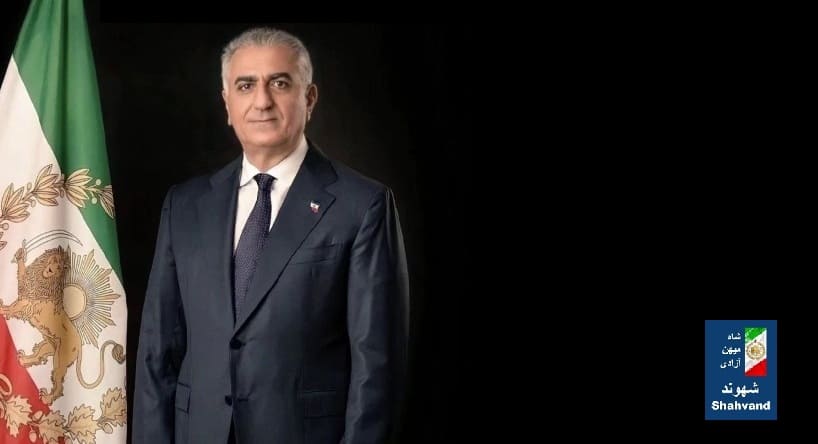
Every successful political transition requires not only institutions but also a recognized source of civilian legitimacy capable of linking one constitutional order to the next.
Within this framework, Reza Pahlavi functions as what this article describes as a Transition Node.
This concept should not be interpreted as a proposal to restore the monarchy by political decree, nor does it predetermine Iran’s future constitutional system.
Rather, it reflects the practical reality that transitional periods often require a nationally recognized civilian figure capable of reducing institutional uncertainty while democratic institutions are being reconstructed.
Within this framework, the Transition Node performs three complementary functions.
First, it provides domestic continuity by offering a broadly recognized civilian reference point outside the institutional structure of the Islamic Republic.
Second, it facilitates international engagement by providing foreign governments with a clearly identifiable interlocutor during the transition.
Third, it contributes to institutional stability by reducing uncertainty within state institutions regarding the source of civilian constitutional authority.
This formulation is consistent with Reza Pahlavi’s repeatedly stated position that the Iranian people—not any individual or political movement—should determine the country’s permanent constitutional order through a democratic referendum.
The Transition Node therefore belongs to the transitional process rather than to its constitutional outcome.
Domestic Legitimacy Before International Recognition
No transition can ultimately succeed through elite bargaining or external pressure alone.
Political authority must first be accepted inside Iran.
Domestic legitimacy therefore precedes international recognition.
Citizens are unlikely to accept a new constitutional order solely because it receives diplomatic endorsement abroad. Legitimacy develops through functioning institutions, personal security, economic continuity, and confidence that constitutional authority is being transferred through transparent legal procedures rather than factional competition.
International recognition is likewise unlikely to emerge simultaneously. Washington, European governments, regional Arab states, Turkey, Israel, and other major international actors will evaluate a transitional authority through different strategic interests and political considerations. Recognition is therefore likely to develop sequentially rather than simultaneously.
Domestic legitimacy thus becomes the foundation upon which broader international recognition can gradually develop.
International recognition may strengthen a functioning transition.
It cannot substitute for one.
Dismantling the Parallel State
Transition Architecture is concerned not only with transferring political authority but also with transforming the institutional foundations of the Islamic Republic.
This requires distinguishing between the Iranian state and the parallel structures of the Onion State.
The administrative institutions of the state—ministries, municipalities, courts, schools, hospitals, universities, and the professional civil service—must continue functioning throughout the transition.
The parallel institutions of ideological power should not.
The extensive commercial empire of the IRGC and the economic holdings of the major bonyads constitute the financial foundations of the parallel state. Their continued political autonomy would preserve significant elements of the existing constitutional order.
Accordingly, the transitional authorities would place these assets under transparent public administration through independent judicial supervision. Corporate holdings, strategic industries, financial assets, and major real estate portfolios would be transferred to a temporary National Trust, acting on behalf of the Iranian people.
The National Trust would preserve these assets throughout the transition while independent auditing determined their legal status. Following constitutional normalization, Parliament and the future elected government would determine which assets should remain public, which should be privatized through transparent procedures, and which should be returned to their lawful owners where appropriate.
The objective is not economic revenge.
It is the peaceful dismantling of the economic foundations of the parallel state while preserving national wealth and preventing administrative collapse.
Constitutional Reconstruction
Institutional transition ultimately requires constitutional transformation.
The doctrine of Velayat-e Faqih, which has defined the Islamic Republic since 1979, would be replaced by a constitutional order founded upon popular sovereignty rather than clerical sovereignty.
This process would include the abolition of constitutional provisions establishing religious rule, the institutional separation of religion and state, equal citizenship regardless of religion or belief, judicial independence, the protection of fundamental rights, and the rule of law under a secular democratic constitution.
The transitional process would conclude with a national referendum allowing the Iranian people to determine the permanent form of government—a parliamentary monarchy or a republic. Following that decision, a new constitution would be drafted in accordance with the referendum’s outcome and submitted to the electorate before free parliamentary and national elections establish the permanent democratic institutions of the state.
Transition Architecture therefore represents neither an alternative to democracy nor a substitute for popular sovereignty.
It is the institutional bridge through which democratic legitimacy is established while preserving the continuity of the Iranian state.
V. Managing the State’s Coercive Institutions and the Limits of Transition
No constitutional transition can succeed without addressing the institutions that exercise the state’s coercive power. Constitutions establish legal authority, but political order ultimately depends upon whether military and security institutions recognize a new constitutional chain of command.
In Iran, this places the Artesh and the Islamic Revolutionary Guard Corps (IRGC) at the center of any realistic transition scenario.
Although often grouped together as Iran’s armed forces, they differ fundamentally in institutional identity and constitutional purpose.
The Artesh is the country’s conventional military, historically oriented toward defending Iran’s territorial integrity. Despite serving under the Islamic Republic for more than four decades, it has largely retained the characteristics of a professional national army.
The IRGC occupies a fundamentally different position.
Established to defend the Islamic Revolution rather than the Iranian state alone, it has evolved into a military, political, intelligence, and economic institution whose influence extends far beyond national defense. As such, it constitutes one of the principal pillars of the Onion State rather than simply another branch of the armed forces.
This distinction is likely to shape any future constitutional transition.
The Artesh: From Neutrality to Constitutional Continuity
Political transitions are often discussed in terms of military defections. Historical experience suggests a more nuanced pattern.
Professional armed forces rarely initiate political transformation. More commonly, they seek to preserve institutional cohesion while avoiding direct participation in partisan conflict.
Iran’s own history illustrates this dynamic. During the final months of the Pahlavi monarchy, the Artesh gradually withdrew from political confrontation as the existing constitutional order lost its governing capacity. Regardless of historical interpretation, one institutional lesson remains relevant: neutrality often precedes constitutional realignment.
For this reason, attempting to transform the Artesh into an active instrument of regime change risks politicizing an institution whose long-term value lies precisely in its national rather than ideological character.
A more realistic objective is to preserve its institutional cohesion while reinforcing its responsibility to protect territorial integrity, public order, and critical infrastructure during a constitutional transition.
Once a broadly recognized civilian authority has emerged, institutional neutrality may gradually evolve into constitutional alignment.
The role of the Artesh is therefore not to determine Iran’s political future, but to safeguard the constitutional environment in which the Iranian people determine that future themselves.
The IRGC: Adaptation Rather Than Automatic Fragmentation
The future of the IRGC presents a considerably more complex challenge.
The organization is neither politically uniform nor institutionally static. It encompasses military commands, intelligence organizations, provincial structures, strategic industries, commercial enterprises, and extensive financial networks whose interests may not always coincide.
The recent war demonstrated both the strengths and vulnerabilities of this structure. Leadership losses weakened operational capacity, yet the organization preserved institutional continuity by redistributing responsibilities across its existing command structure.
This suggests that leadership decapitation alone is unlikely to dismantle the IRGC.
Its future will depend less upon individual personalities than upon the broader political environment created during constitutional transition.
If a broadly legitimate civilian authority emerges, different elements of the organization may respond differently. Some may seek accommodation with the new constitutional order, others may resist, while still others may simply prioritize institutional survival over ideological confrontation.
None of these outcomes should be regarded as predetermined.
Their evolution will depend upon political legitimacy, elite cohesion, economic conditions, and the credibility of the transitional institutions themselves.
Risks and Limitations
No analytical framework can eliminate the uncertainty inherent in systemic political change.
The model presented here should therefore be understood not as a prediction but as an institutional framework for reducing the risks associated with constitutional transition.
Several uncertainties remain.
A broadly accepted Transition Council may not emerge quickly. Competing political movements, regional actors, or institutional elites could advance alternative claims to authority.
The future behavior of both the Artesh and the IRGC will remain contingent upon political developments that cannot be predicted with certainty.
International actors are also unlikely to pursue identical objectives. Differences among the United States, European governments, regional Arab states, Turkey, and Israel may complicate diplomatic coordination during any transition.
Finally, democratic transitions rarely follow linear paths. Leadership decisions, public participation, economic conditions, and unforeseen events will continue to shape outcomes in ways that no institutional model can fully anticipate.
Transition Architecture should therefore be understood as an analytical framework for managing uncertainty rather than eliminating it.
Beyond Maximum Pressure
The Israel, U.S.–Iran war has transformed the strategic debate over Iran’s future.
For decades, Western policy concentrated primarily on weakening the Islamic Republic through sanctions, military deterrence, diplomatic isolation, intelligence cooperation, and support for Iranian civil society. The post-war environment suggests that these instruments remain important, but it also demonstrates their limits.
Despite significant military degradation, the Islamic Republic did not experience institutional collapse. Instead, authority was redistributed across the layered structures that characterize the Onion State.
This observation carries an important strategic implication.
Pressure Architecture may create strategic opportunity.
Iranian society determines whether that opportunity becomes political change.
Transition Architecture seeks to ensure that, if such change occurs, the Iranian state survives the fall of the existing regime.
The Onion State should therefore be understood as a diagnosis rather than a destination. It explains the resilience of the existing system. Transition Architecture proposes an institutional pathway through which that layered structure can be dismantled and replaced by a unified democratic state founded upon transparent civilian institutions, secular constitutional government, and the rule of law.
Such a transition would conclude not with the establishment of a permanent transitional authority, but with its own dissolution. Its ultimate purpose would be a national referendum allowing the Iranian people to determine whether Iran’s future constitutional order should be a parliamentary monarchy or a republic, followed by the adoption of a new constitution and free national elections.
Whether such a transition ultimately occurs remains uncertain.
What appears increasingly clear, however, is that future policy debates must move beyond maximum pressure alone. They must also prepare for the institutional requirements of an orderly democratic transition while preserving the continuity of the Iranian state.