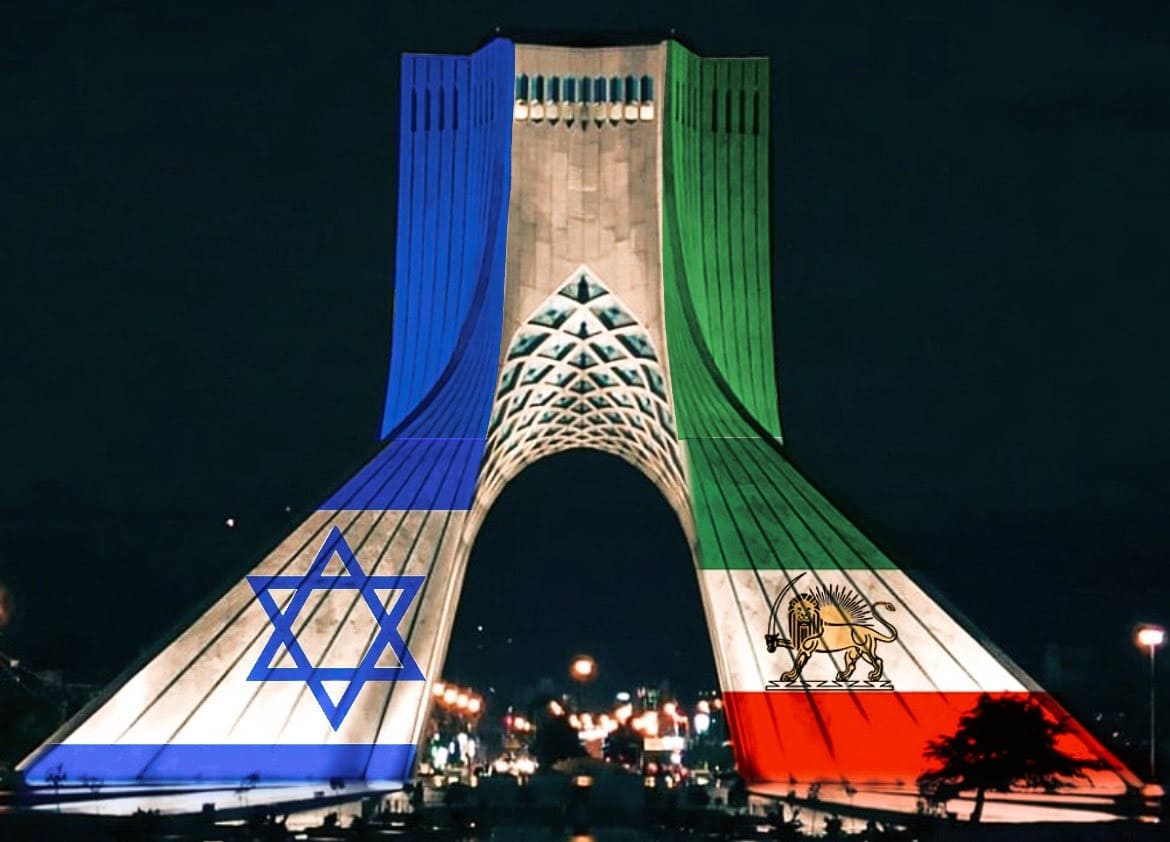

By Raghu Kondori, in The Times of Israel, From Seizing Power to Building a Citizen Society
Iran’s future is not only an internal question for Iranians. It is a regional issue with direct consequences for Israel, neighboring states, and the broader balance of the Middle East. That is why the real question is not simply how the Islamic Republic ends, but what kind of political and social order emerges afterward.
Much of today’s debate focuses on regime change. That is necessary, but not sufficient. History shows that movements can seize power without building stable societies. Iran’s challenge is not only to replace one ruling system with another, but to create the conditions for a durable civic order.
At the center of that order lies the concept of citizenship. Citizenship is more than legal status. It is the basis of a political community in which individuals are equal before the law, regardless of ethnicity, religion, ideology, or faction. In a diverse country like Iran, this is the only framework capable of holding the nation together after transition.
Iran has already lived through several major political transformations, including the Constitutional Revolution, the National Movement, and the 1979 Revolution. Each began with aspirations for a better future, yet each produced a gap between hope and outcome. One reason is that political change was often treated as the final goal, rather than the beginning of a longer process of social reconstruction.
A transition succeeds only when power shifts alongside changes in political culture, public trust, and institutional behavior. Otherwise, old patterns return in new forms. A new government may replace an old one, but without deeper social change, the same fractures reappear.
That is why Iran’s future should be understood through four linked projects: regime change, transition, state-building, and nation-building. The first three are political and administrative. The fourth is civilizational. Governments can fall quickly; societies built on trust, responsibility, and participation take time.
One of Iran’s deepest problems today is the erosion of social capital. Decades of ideological rule have weakened trust and deepened fragmentation. These are not problems that disappear with a new cabinet or a new constitution. They require the gradual rebuilding of civic life, local institutions, and shared national norms.
Families, schools, universities, media organizations, civil associations, and local communities all have a role in this process. Citizenship becomes meaningful when people see themselves not only as rights-holders, but also as participants in a common public life. A sustainable Iran will need both rights and responsibilities.
The Iranian diaspora and technocratic communities can play an important role in this reconstruction. Future Iran will not be built only through competition for political power. It will depend on the ability of knowledge networks inside and outside the country to work together on institutions, education, and development.
The diaspora has accumulated experience, expertise, and international connections. Those inside Iran understand the country’s lived realities. If these two sources of strength can be connected, they could become a major asset in the transition period and beyond.
Citizenship in the twenty-first century also has a new dimension. In an era shaped by knowledge, information, and technology, equal access to these tools is part of real participation in society. A modern citizen must be able not only to vote and speak, but also to learn, create, and contribute in an information-based economy.
That is why education, open access to knowledge, technological capacity, and wider access to AI tools should be seen as part of nation-building, not as secondary issues. AI and digital infrastructure are reshaping the meaning of participation, and a society that excludes large segments of its people from these capabilities risks creating a new form of inequality.
The future of Iran will therefore depend on more than the collapse of an old regime. It will depend on whether a new order can be built around citizenship, law, trust, and shared national purpose. The question is not only how power changes hands, but what kind of society is built after that change.
Seizing power may mark the beginning of a historic transition. Building a citizen society is the work that gives that transition meaning.