
The Tactics of Leftist, Reformist, and Short-Term Nationalist Forces in Wartime — The Shahvand Think Tank.
With the start of a military attack, the tactics of leftist, reformist, and short-term nationalist forces – The Shahvand Think Tank
With the start of a military attack on Iran, a segment of leftist, reformist, and short-term nationalist forces – both inside and outside the country – will enter a propaganda phase. In this phase, their main effort will be to gradually equate “defending the Islamic Republic” with “defending Iran” in the public mind, and to discredit any voice opposing the regime as either war-mongering or aligned with foreign intervention. This semantic shift is not merely a linguistic game, but a deliberate tactic to save the existing power structure; a tactic that seeks to move the conflict from “the people versus the regime” to “Iran versus the world,” thereby erasing the society’s core contradiction at a critical moment.
In the digital sphere, these forces will exploit patriotic emotions, using concepts such as “territorial integrity,” “preserving the country,” and “no to war” in such a way that any discussion of transition beyond the Islamic Republic will be portrayed as weakening Iran’s defensive front. Through mass content dissemination, hashtag campaigns, and emotional mobilization, they will attempt to frame opposition to the regime as collaboration with foreign enemies. In this framework, any political or civic actor who insists on the clear distinction between “Iran” and “the regime” will be accused of weakening the domestic front at a historic moment and effectively playing into the enemy’s hands. The essence of this project, however, is not defending the people of Iran, but preserving the existence of the Islamic Republic under the guise of national slogans.
Outside the country, a significant portion of leftist forces – especially groups and individuals who in recent years have defined themselves as supporters of Gaza and the “Resistance” axis – will also mobilize. They will organize street protests, issue statements, and form temporary coalitions, ostensibly in the name of opposing war and defending peace, but in practice aligning with Tehran’s propaganda line. In this space, their main focus will not be on criticizing the Islamic Republic’s adventurous and crisis-inducing foreign policy, but on shifting all responsibility onto foreign actors – as if the Iranian people and their ruling structure are merely passive objects with no agency or responsibility in shaping the current situation. Such a narrative effectively builds a political and moral shield for a regime that has long been one of the main sources of instability in the region.
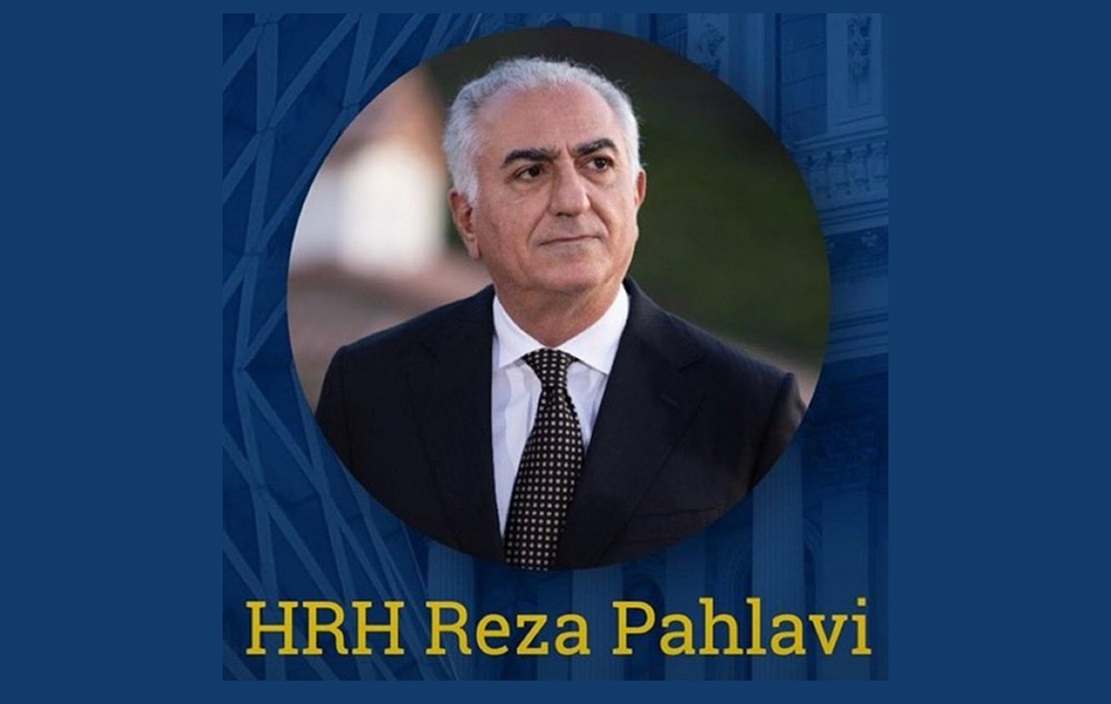
Parallel to this, we will witness intensified targeted attacks against Prince Reza Pahlavi. These attacks are not simply political disagreements or criticism of an individual, but a systematic effort to weaken the most prominent symbol of a coherent and recognized alternative both domestically and internationally. The more serious the possibility of consensus around a transition from the Islamic Republic toward a system based on national sovereignty and free popular vote becomes, the more intense these attacks will grow. From character assassination and distortion of positions to constructing false dichotomies between “republic” and “monarchy,” all tactics will be employed to divert the revolutionary energy of society away from genuine transition and into exhausting intra-opposition disputes.
It must be clearly seen that the sum of these actions – from presenting defense of the regime as defense of Iran, to anti-war demonstrations that in practice serve to preserve the regime, to the organized destruction of serious alternatives – are components of a larger staging. In this staging, the critical moment that could become a turning point for transition from the Islamic Republic is instead turned into an opportunity to reproduce the same worn-out order. Political vigilance in such conditions means recognizing the boundary between “defense of Iran” and “defense of the Islamic Republic,” standing with the long-term interests of the people, and rejecting any fabricated equation that equates the existence of a regime with the existence of a nation. Shahvand Think Tank emphasizes this vital distinction and warns against being deceived by such staging; for Iran’s future is not hostage to the survival of any ruling system.
U.S. and Israeli military support is necessary for the fall of the Islamic Republic and a lower-cost transition to freedom for Iran.
#Javid Shah
—The Shahvand Think Tank