Will the U.S. and Israel Act Before the Next Massacre?
Timing, Deterrence, Iran’s Final Test. By Raghu Kondori | Shahvand Think Tank.
Iranians are rising again. They do so knowing the inevitable sequence: bullets, prisons, and the gallows. They do not take to the streets out of illusion, but because life under the Islamic Republic has become unlivable. Each chant is a wager against death; each march is a declaration that survival without dignity is no survival at all.
The regime’s playbook is fixed. It tolerates dissent briefly to identify targets, then kills communications to blind the world. It floods cities with IRGC forces and massacre protestors, pushes resistance from the streets into the shadows of the prison system. Finally, executions eclipse the headlines. This is not chaos—it is a choreographed cycle of repression. It succeeds because the international community reacts only after order is restored, when the gallows have already completed their grim work.
Washington’s script remains tragically predictable. Strong statements land on day one, but protection never follows. By the time consultations finish, the cells are overflowing. By the time talks grind on, the bodies mount. By the time consequences are even debated, the uprising has been entombed. Cheering for a revolt without providing mid-repression support is not neutrality—it is a lethal asymmetry. Civilians bet their lives while the regime swings unchecked. In this vacuum, Western rhetoric turns to poison.
Israel, more than others, understands the importance of timing. Swift disruption—whether through precise strikes on security nodes, attacks on IRGC military centers and oppressors, elimination of IRGC and Basij security leaders, cyber operations to break the internet blackout, or psychological pressure that undermines IRGC cohesion—buys hours. These hours matter. These are defining days. When the executions begin, deterrence is dead. The lesson for the US-Israel alliance is simple: deterrence is not built after the massacre; it is built by preventing it.
Diplomacy does not halt massacres; it survives them. A regime that kills mid-negotiation learns that repression costs nothing real. Post-blood sanctions do not deter; they merely file the record. The Islamic Republic has mastered this rhythm: kill first, negotiate later. By indulging talks while the gallows are active, the world teaches Tehran that state-sponsored murder is consequence-free.
If the U.S. and Israel mean to back the Iranian people, they must move beyond the false binary of “statements” versus “invasions.” They must act early, in limited but decisive ways. Precision disruption of the security apparatus, real-time tools to bypass internet blackouts, and immediate penalties for judges and commanders overseeing executions. Above all, one iron rule must hold: no negotiations while the regime is killing its own people.
The stakes are not abstract. Every uprising tests whether outside powers will act before the massacre phase begins. Every delay signals to Tehran that repression is safe, predictable, and profitable. Every moment of silence is a form of complicity.
Iranians rise knowing the cost. The question is whether Washington and Jerusalem will act when it actually counts—before the gallows, not after.
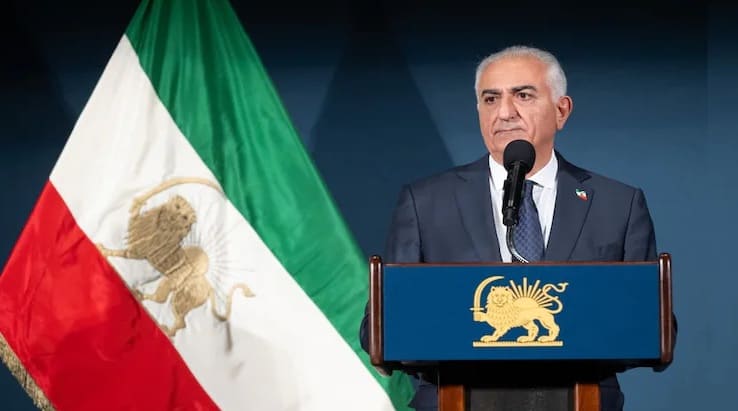
Leadership of Prince Reza Pahlavi and the Reconstitution of National Unity
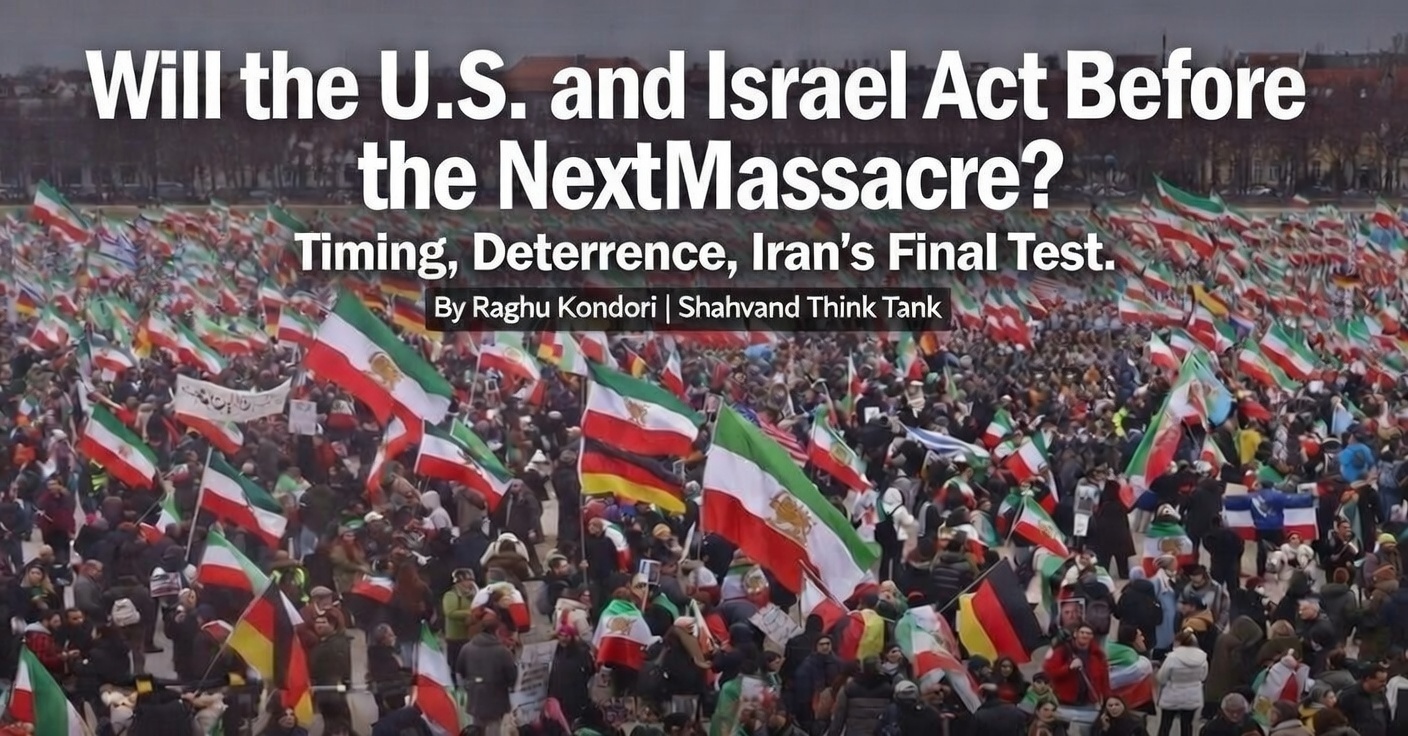
On the Global Day of Action, February 14, called by Prince Reza Pahlavi, nearly one million Iranians filled the streets of Munich, Toronto, and Los Angeles. Millions more mobilized across Europe, Australia, and the wider diaspora. Lion and Sun flags dominated the streets. Posters carried the Prince’s image. The chant was unmistakable: Javid Shah.
This was not a symbolic rally or an emotional release. It was a strategic signal. After decades of repression, exile, and enforced fragmentation, Iranians demonstrated something the Islamic Republic has worked relentlessly to destroy: unity around a recognized national leader. Workers’ unions, students, women’s movements, and exiled political networks appeared together—not as competing factions, but as a single political body asserting coherence.
For forty-six years, the regime survived by preventing precisely this outcome. It atomized society, criminalized leadership, and replaced national continuity with ideological fear. February 14 exposed the limits of that strategy. What emerged was not nostalgia, but legitimacy—rooted in historical memory, national sovereignty, and a shared vision of post-regime statehood.
Leadership is not a luxury in revolutionary moments; it is a prerequisite for survival. Uprisings without a political center are easily crushed, hijacked, or drowned in blood. The scale, discipline, and geographic breadth of this mobilization showed that Iranians are no longer rising as isolated protestors. They are reassembling as a nation—with a focal point, a flag, and a claim to power.
This alters the strategic equation. Support for the Iranian people is no longer an abstract moral posture. It now has a visible axis of leadership and legitimacy. For the United States and Israel, ignoring this reality is not caution—it is blindness. Every delay strengthens the regime’s confidence that it can kill first and negotiate later. Every hesitation signals that unity will again be punished with mass graves.
Iranians have made their choice, knowing the cost. They have shown who they follow and what they are prepared to risk. The final question remains unchanged, but sharper than ever: will Washington and Jerusalem act when it still matters—before the gallows, not after?