From Cyrus the Great to Prince Reza Pahlavi

The Legacy of Iranian Secularism and the Quest for National Renewal.
Raghu Kondori | Shahvand Think Tank
In the ancient world, legitimate power came from the temples. Kings saw themselves as emissaries of the gods, and rule often meant religious domination.
But Cyrus chose a different path: he founded a government whose legitimacy came not from sanctity but from justice and respect for human beings.
His famous decree — the Cyrus Cylinder — was more than a historical document; it was the political philosophy of a civilization. In it, he outlined principles that remain strikingly modern:
Freedom of faith: releasing the Jews from captivity and guaranteeing freedom of worship for all nations.
Justice and equality: respect for all ethnicities within a multicultural structure.
Cultural diplomacy: acceptance of local languages and customs instead of forced assimilation.
Peace and cooperation: governing through trust rather than fear.
Cyrus was perhaps the first ruler in history to liberate politics from religious control without rejecting spirituality itself. In his view, faith was separated from state so that it might remain free, and power distanced itself from religion so that it could remain moral.
This is what might rightly be called Iranian ethical secularism — a vision born in the heart of Iranian history, not imported from Western thought.
Secularism as Political Intelligence
For Cyrus, secularism was not an abstract philosophical doctrine; it was a practical strategy for survival and stability.
He realized that a multiethnic empire could endure only if it embraced diversity within. From this understanding emerged a distinct Iranian political intelligence — a wisdom that sought unity not by eliminating differences but by embracing tolerance.
In modern terms, this approach could be described as cultural resilience — the capacity of a society to remain cohesive amid diversity.
Cyrus embodied this insight centuries before the term existed. His governance was not merely historical but psychological and human — a model still profoundly relevant in today’s divided world.
Prince Reza Pahlavi and the Modern Reflection of an Ancient Legacy
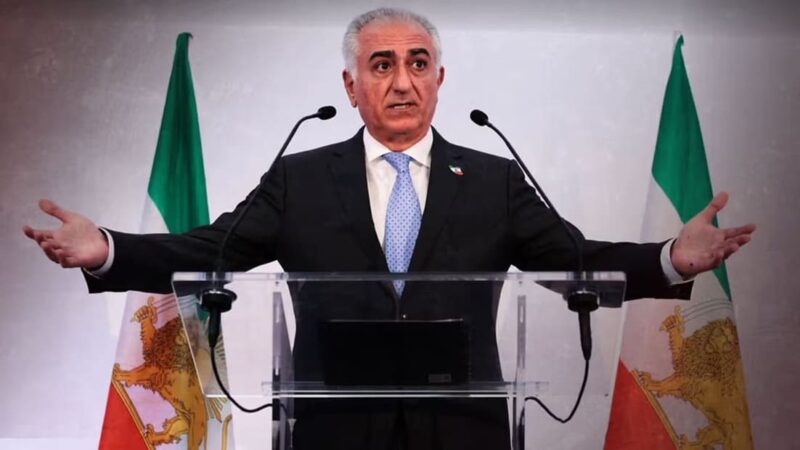
In our own time, Prince Reza Pahlavi has revived this same historical philosophy in the language of modern politics.
He advocates the separation of religion and state not to erase faith, but to restore it to its moral and cultural place. In his perspective, religion should no longer serve as a political tool but as a source of personal conscience.
Reza Pahlavi speaks of freedom of thought, an open economy, sustainable development, and an independent cultural identity — principles that unmistakably echo the vision of Cyrus.
Just as Cyrus looked out upon the world from the “Gate of Freedom,” the Prince envisions an Iran where the nation moves forward guided by reason, justice, and human dignity.
A Legacy for Iran’s Future
Over two and a half millennia separate Cyrus the Great and Prince Reza Pahlavi, yet a shared idea connects them like an invisible thread:
Iran regains its true greatness only when power is balanced with freedom and justice.
If Cyrus was the founder of ethical secularism in the ancient East, Reza Pahlavi can be seen as its modern reflection in an age of ideological turmoil.
In a world once again sliding toward religious extremism and narrow nationalism, this Iranian legacy matters more than ever. Secularism in Iran is not an imported Western construct nor a sterile ideology — it is the continuation of our own indigenous wisdom, a philosophy of coexistence, dialogue, and national renewal.
In the continuum between Cyrus and Reza Pahlavi, secularism ceases to be a mere political theory; it becomes a strategy for rebuilding Iran — for restoring its natural place in a free, diverse, and morally grounded world — the very world Cyrus once envisioned on his Tablet of Freedom, at the dawn of history.