From Venezuela to Iran
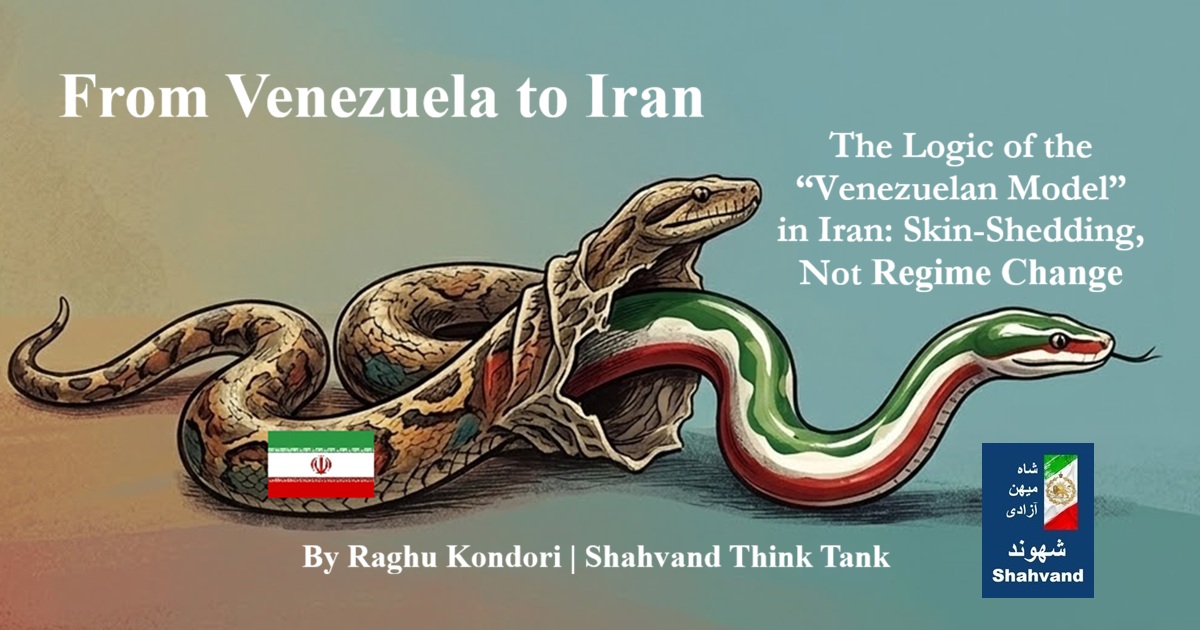
The Logic of the “Venezuelan Model” in Iran: Skin-Shedding, Not Regime Change (January 2026). By Raghu Kondori | Shahvand Think Tank.
What is raised under the title of the “Venezuelan model” for Iran is neither a democratic transition project nor a plan for revolutionary overthrow, but a scenario for controlled regime shedding. The goal is to preserve the overall political system by eliminating costly and crisis-inducing elements, and rearranging the power elites within a framework manageable for foreign actors. The focus is on changing the “face of governance,” not transforming the “nature of power.”time+1
The removal of the Guardianship of the Islamic Jurist (Velayat-e Faqih) is defined not as the collapse of the system, but as discarding a worn-out shell. This removal cannot be merely legal; the survival of Velayat-e Faqih—even in a weakened form—remains a focal point for ideological and security mobilization, disrupting the shedding process. The fate of Ali Khamenei carries geopolitical importance: keeping him alive under arrest poses a strategic risk and could activate dormant terrorist cells. The swift and irreversible elimination of the leader prevents revolutionary mobilization.
Institutional Restructuring and Succession Engineering
Succession takes shape through intra-systemic engineering. Khamenei, the Leader’s household (Bit-e Rahbari), and key obstructive figures are sidelined; limited arrests and trials of military and security personnel—as “direct perpetrators of massacres”—serve to vent public rage. These are tools for rebuilding legitimacy, not transitional justice.
The IRGC’s economic cartels are preserved. The IRGC is merged into the regular army to unify command, not to strip power. Intelligence agencies are centralized under the government. Velayat-e Faqih is either eliminated or reduced to a purely symbolic role; figures like Mohammad Khatami or Hassan Khomeini could fill a ceremonial position, while a government centered on Tajzadeh-types manages the controlled transition.
Shedding Coalition and Referendum Engineering
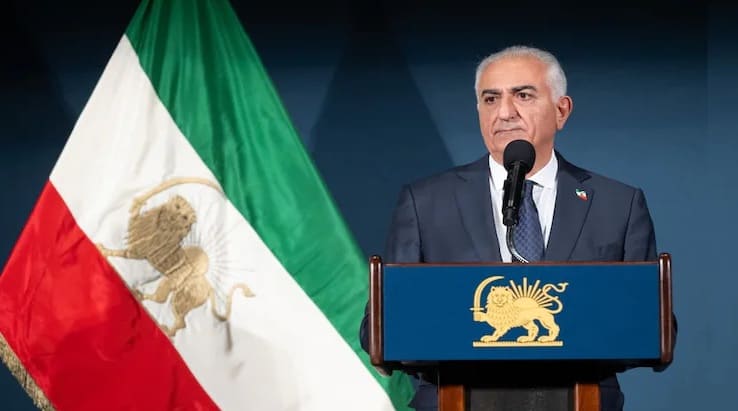
Reformists, Mujahedin-e Khalq, separatists, and leftists overlap on shedding: opposition to the Pahlavi monarchy and preservation of the Islamic Republic. The referendum is limited to “Islamic Republic or Iranian Republic” to exclude monarchy. However, a genuine plebiscite—with majority support for Crown Prince Reza Pahlavi—would challenge the project. Geopolitics: strikes and negotiations stabilize shedding; oil management, nuclear dismantlement, and isolating Pahlavi. Success depends on the Prince’s strategy, monarchist base reactions, and the people’s response.
Israel and U.S. Strategy
Delay in strikes buys time for shedding. Israel prioritizes full regime overthrow; the U.S. seeks oil stability. Netanyahu pressures Trump for attacks beyond red lines. The response will determine the project’s fate.