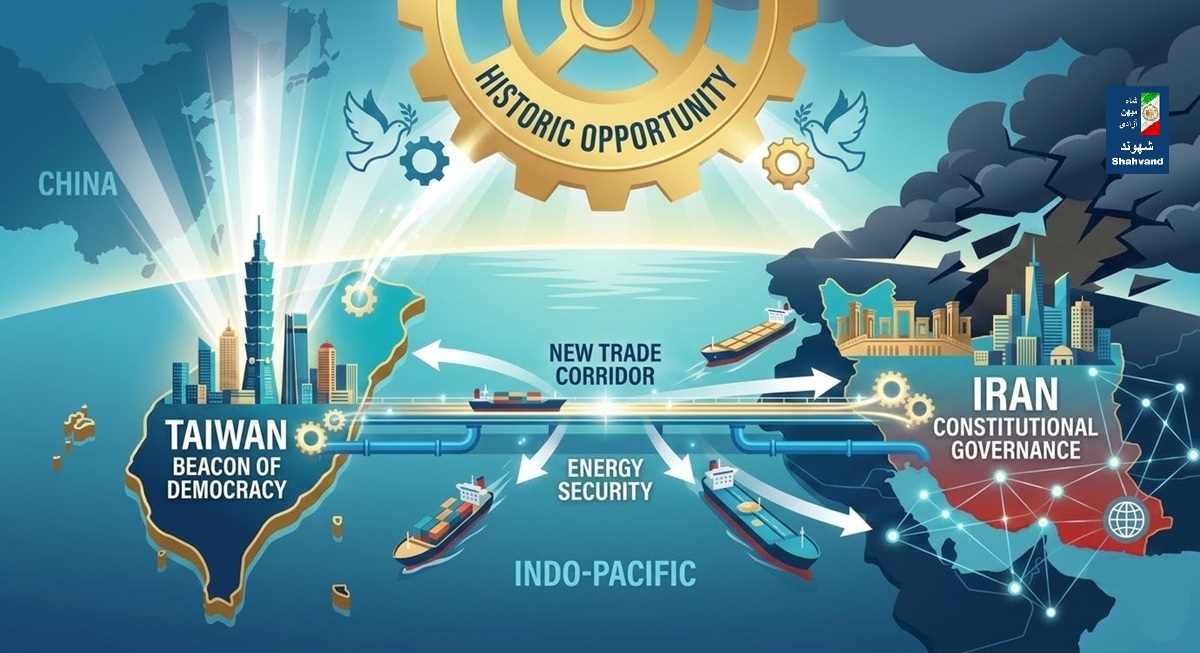

Taiwan’s silence on Iran’s regime change represents a serious strategic oversight.
By Raghu Kondori | Shahvand Think Tank.
Taiwan’s silence on Iran’s regime change represents a serious strategic oversight, squandering a historic chance to break its diplomatic isolation. The lack of condemnation regarding Iran’s massacres or support for democratic forces shows a failure to grasp the shifting geopolitical stakes. Taiwan must expand its foreign policy by seizing this moment, moving beyond reactive measures to proactively engage with Iran’s opposition and emerging democratic powers. Bold recognition of a post-regime Iran could forge formal ties, challenge China’s containment narrative, and signal that Taiwan is a global actor capable of shaping alliances far beyond its immediate region.
A transformed Iran offers Taiwan a vital energy market to diversify supplies, open a new economic partisanship for the Iran market, and boost the economy through new trade corridors. Platforms like the Shahvand Think Tank exemplify how these networks can serve as an intellectual and strategic bridge. By connecting pro-Pahlavi democratic advocates with international policy and diplomatic circles, Shahvand translates aspirations for a post-Islamic Republic Iran into actionable dialogue.
Taiwan’s engagement with these communities is not only timely but strategic: the opposition today needs friends, and tomorrow Iran will remember who stood by them. Early support can build strong diplomatic ties, economic partnerships, and long-term strategic alliances. By leveraging the diaspora and signaling clear foreign policy commitments, Taiwan can amplify its influence, support constitutional governance in Iran, and demonstrate a genuine commitment to democratic values—transforming the island from a passive observer into a proactive architect of the Middle East’s democratic transition.