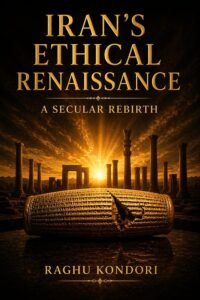
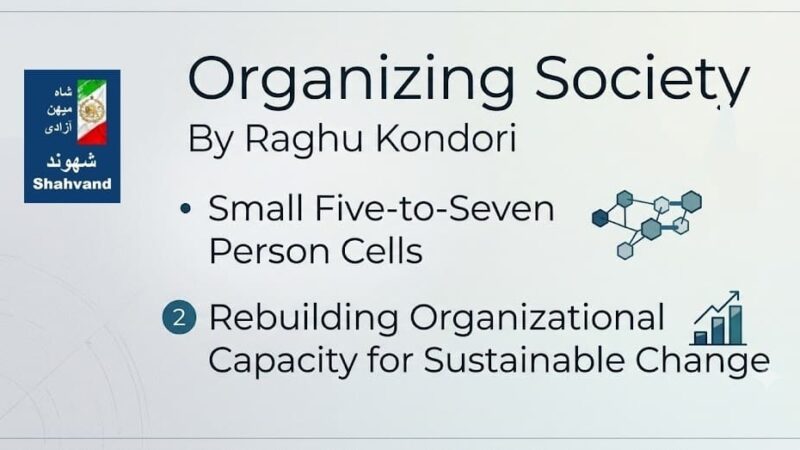
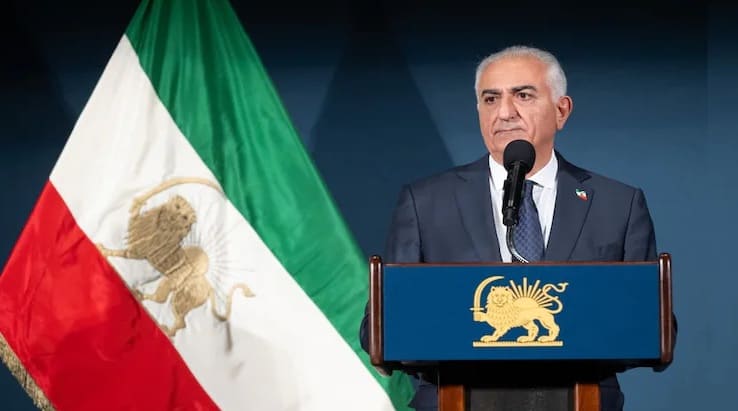
Iran’s Ethical Renaissance
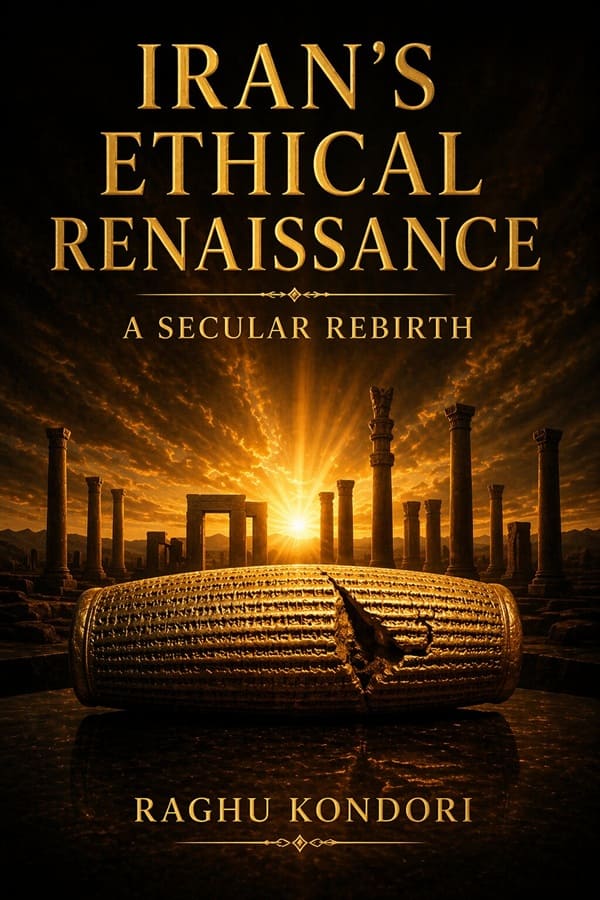
Iran’s Ethical Renaissance , Raghu Kondori
on Amazon.
What comes after the fall of Political Islam?
Can a nation rise again—not through revolution, but through ethics?
A society finds peace when its thoughts, words, and deeds are in alignment.
After decades of ideological rule, Iran stands at a historic crossroads.
In Iran’s Ethical Renaissance, Raghu Kondori examines how a system built on imposed belief gradually lost coherence, credibility, and trust—and what comes after.
A system in exhaustion
This book looks at the structural breakdown of moral authority in modern Iran:
- the internal contradictions of Political Islam
- the mechanisms that sustained the system beyond its legitimacy
- the erosion of civic identity and long-term social confidence
A secular rebirth
This is not only a critique.
It is a vision of a secular rebirth—a transition toward a state where legitimacy is not enforced, but earned through alignment between thought, words, and deeds.
Drawing on Iran’s ethical heritage and modern political analysis, the book outlines a path toward a coherent order—one in which belief is free, authority is accountable, and society is no longer defined by imposed ideology.
A framework, not a slogan
At the center of this vision is a simple principle:
Good Thoughts. Good Words. Good Deeds.
Not as abstraction, but as a working standard—for governance, for public life, and for rebuilding trust.
This is not a call for nostalgia.
It is not a call for another ideology.
It is a call for reconstruction.
This is not simply the end of a system.
It is the beginning of a renaissance.
#IranEthicalRenaissance